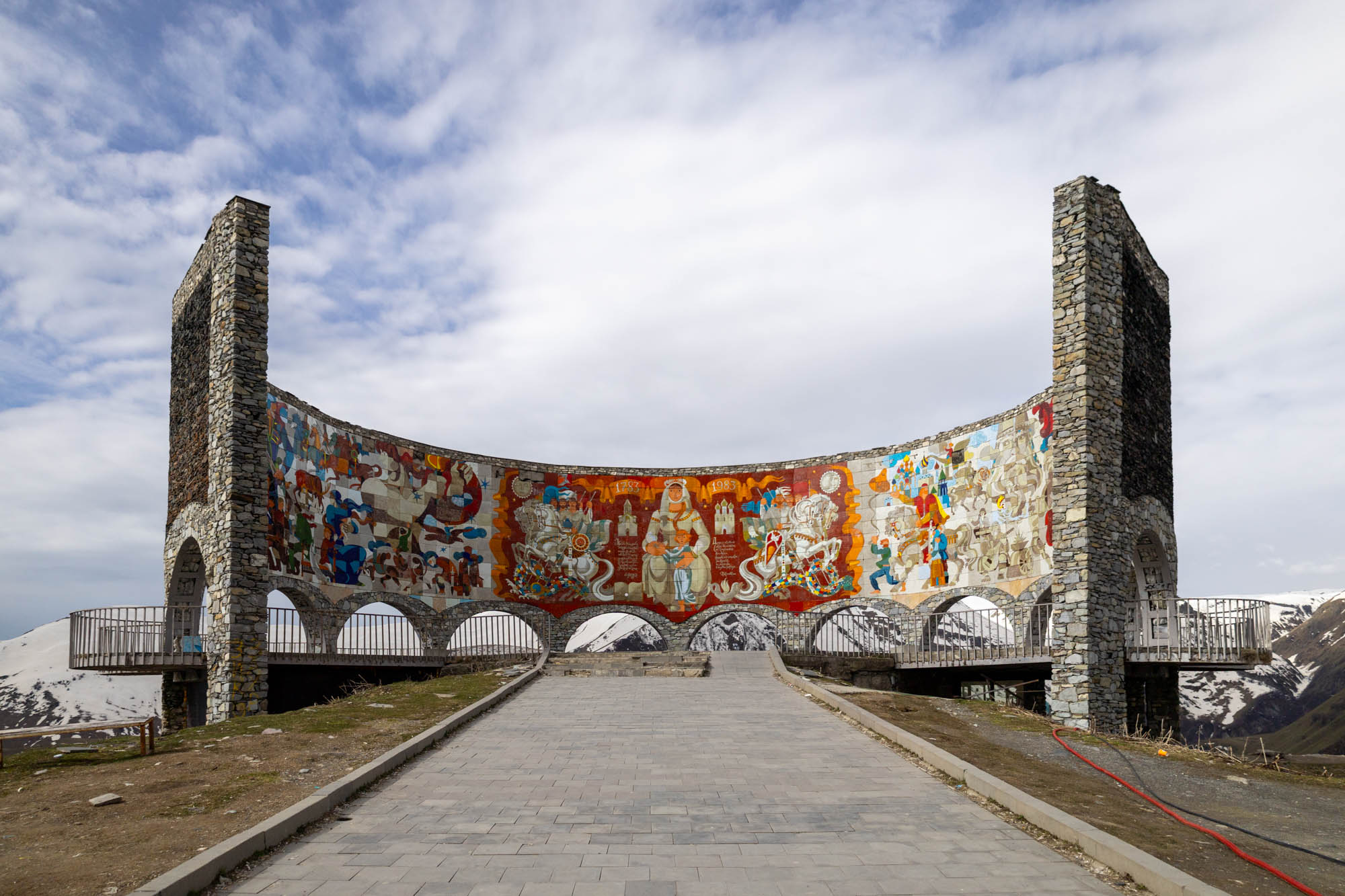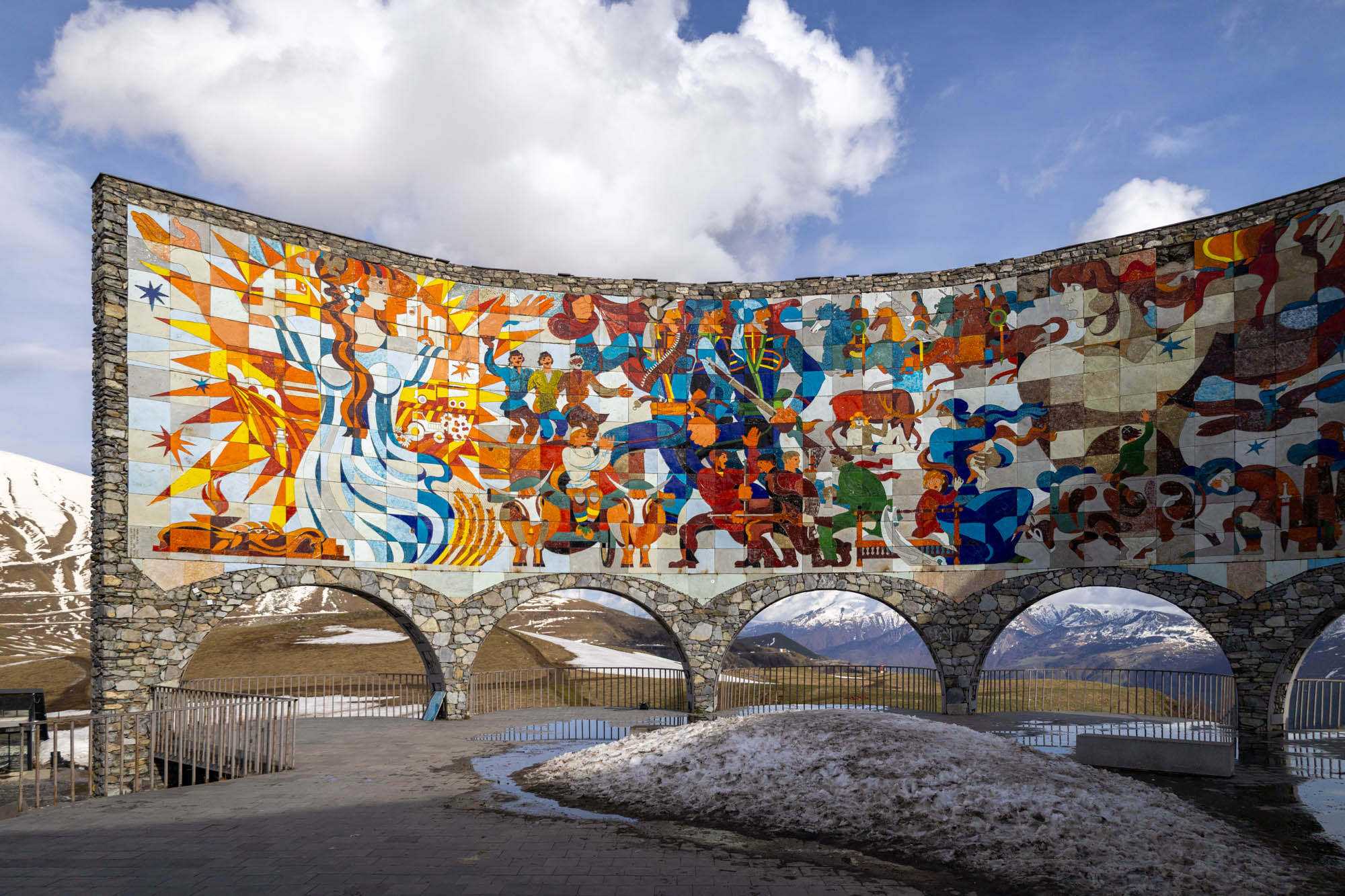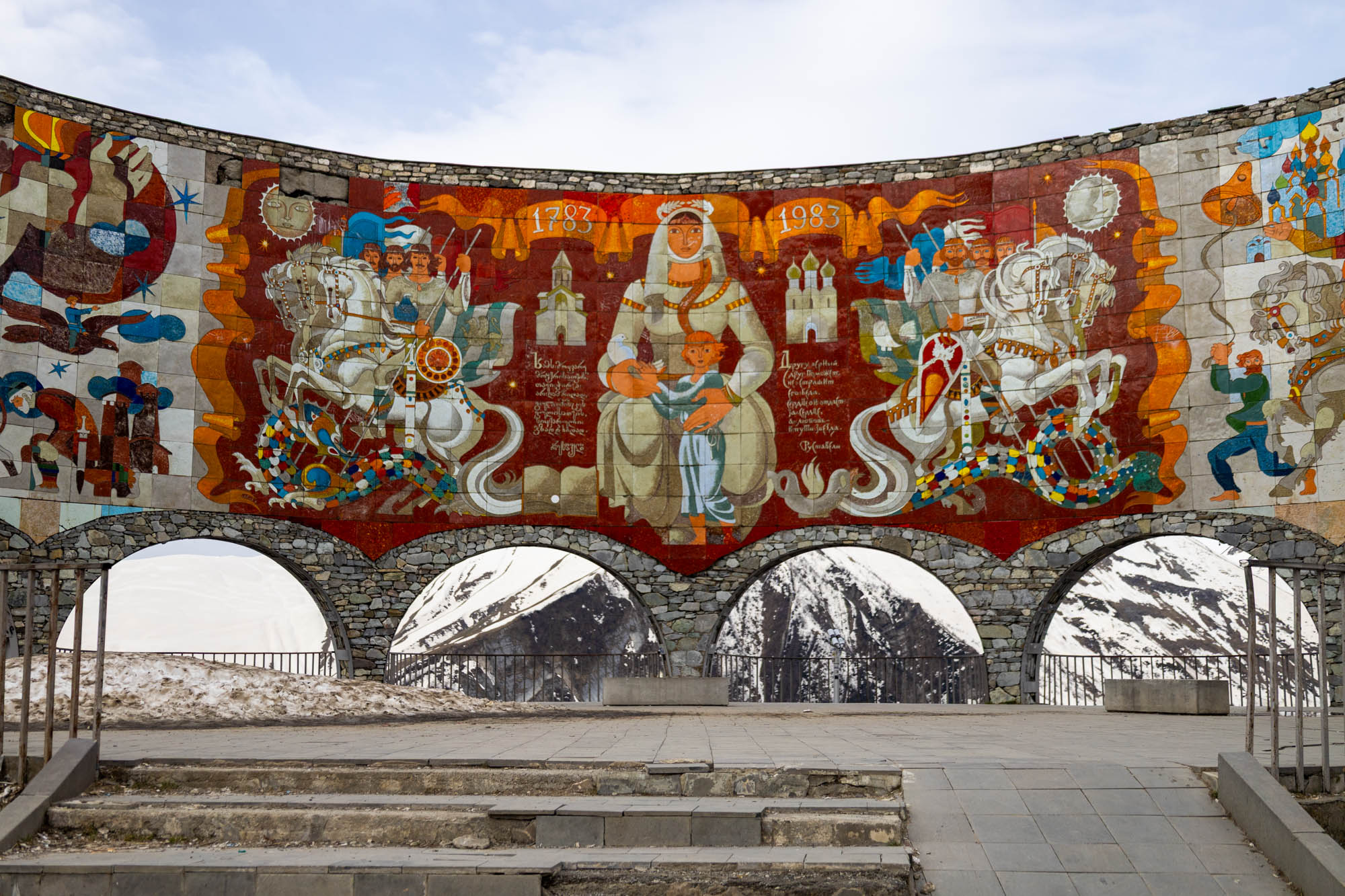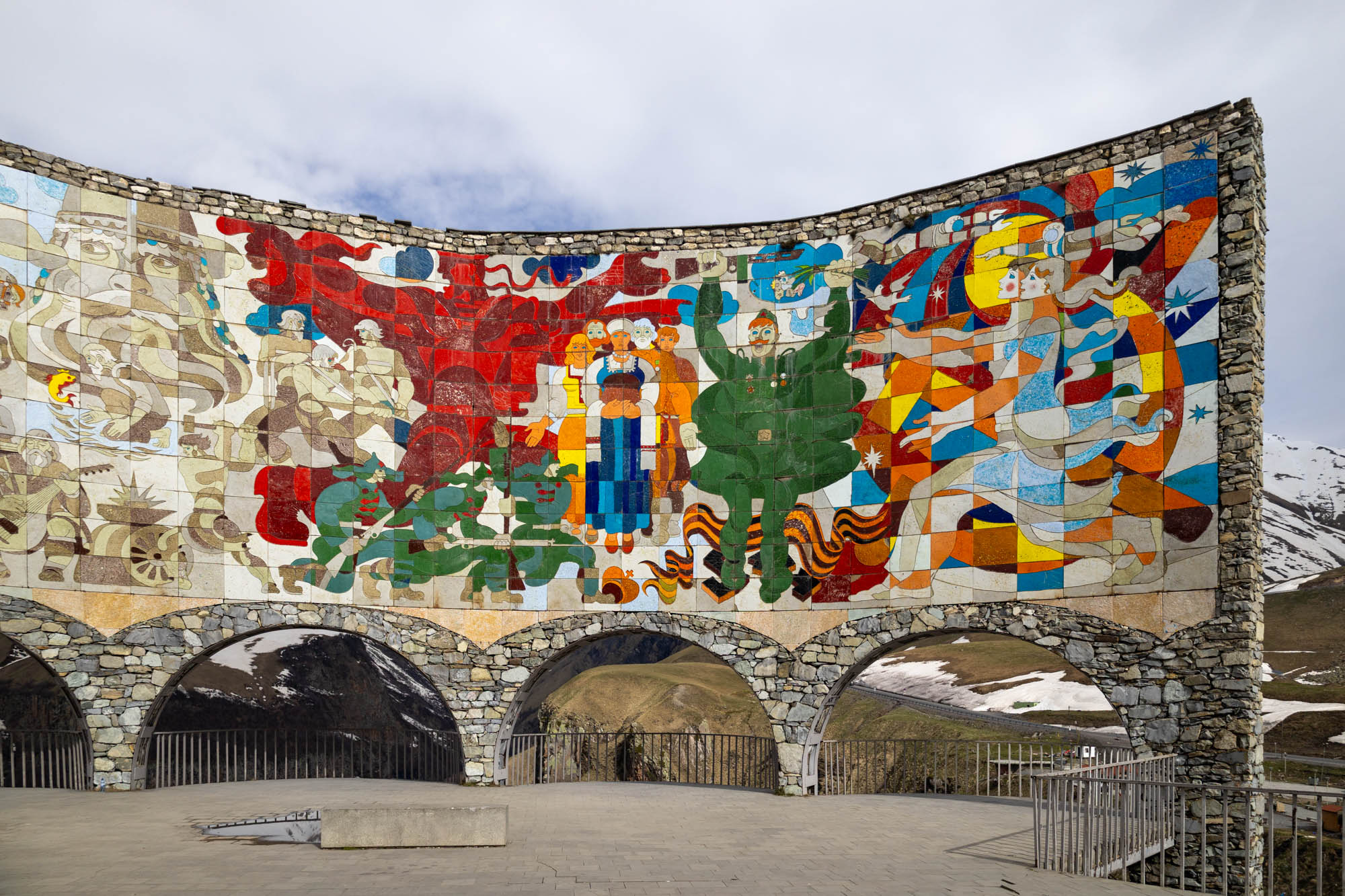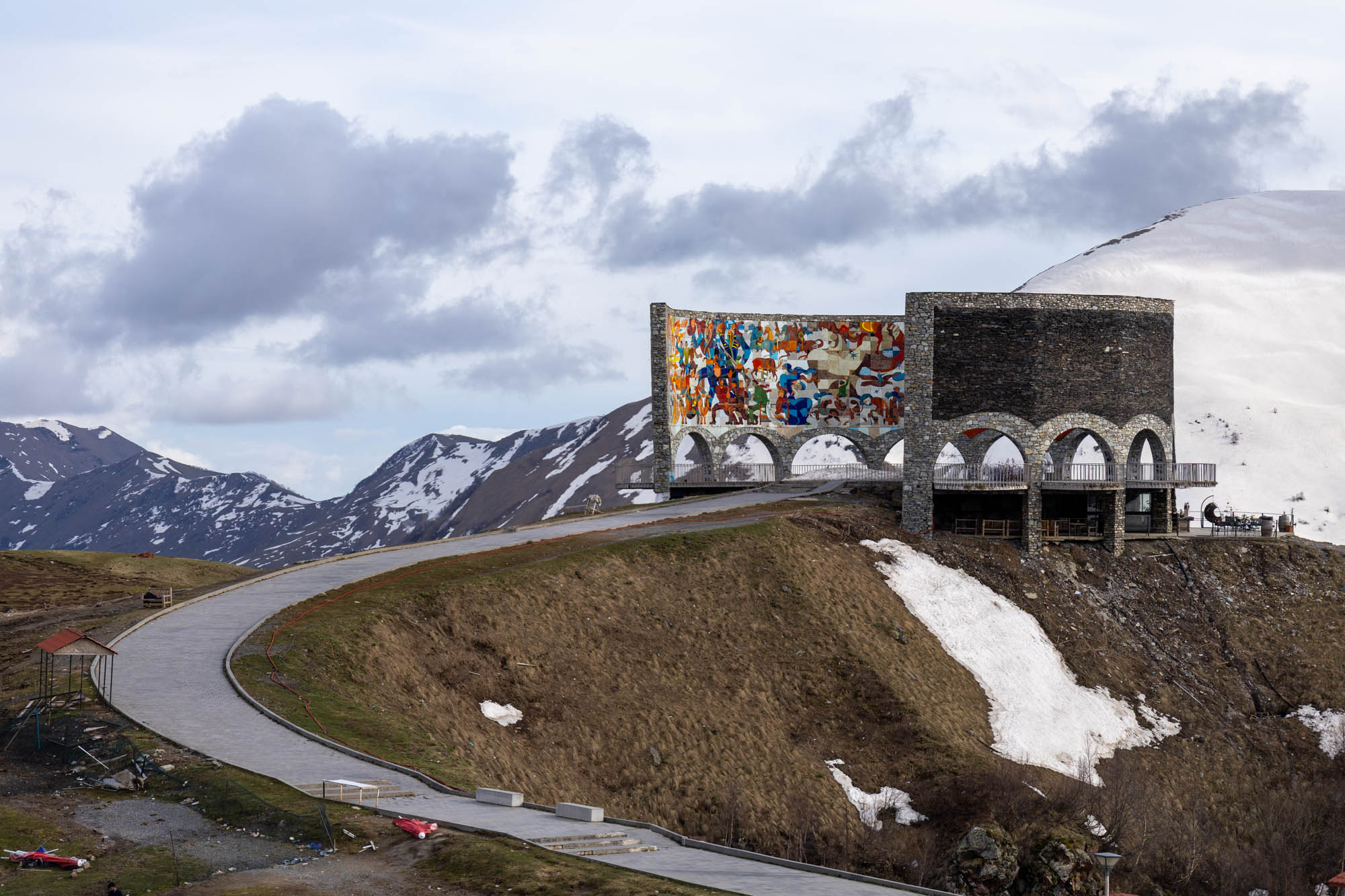
Perched high in the mountains of northern Georgia, about an hour’s drive from the Russian border along the Georgian Military Highway, stands a large curved mural. Originally known as the Russia–Georgia Friendship Monument, it was erected in 1983 by the Soviet Union to commemorate 200 years since the Treaty of Georgievsk—an agreement that made eastern Georgia a Russian protectorate, safeguarding its territorial integrity.
Yet in 1795, just two years after the treaty was signed, when the Persian ruler Agha Mohammad Khan invaded Georgia, the Russians did nothing to help. Some say this was a friendship that never existed.
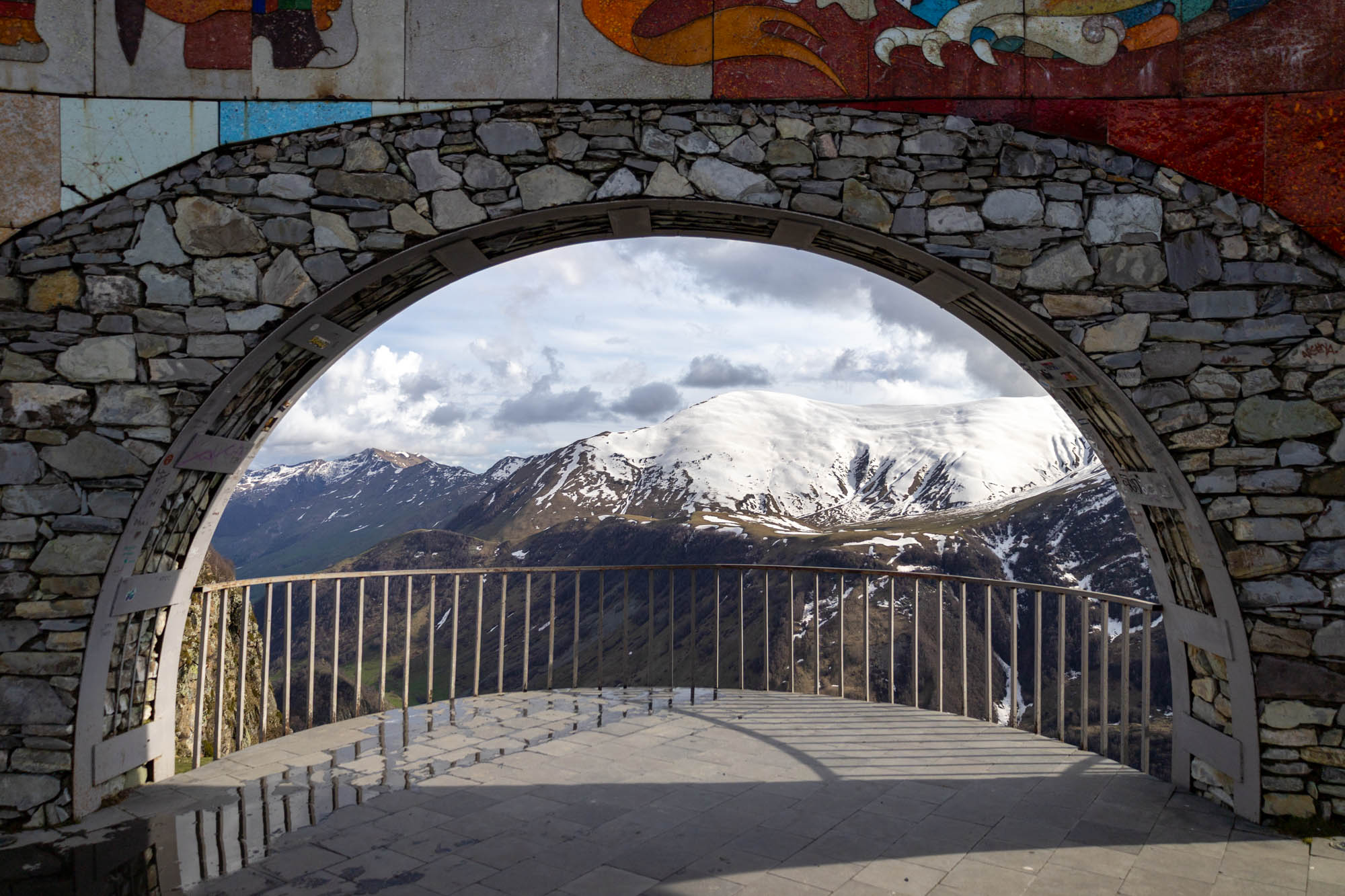
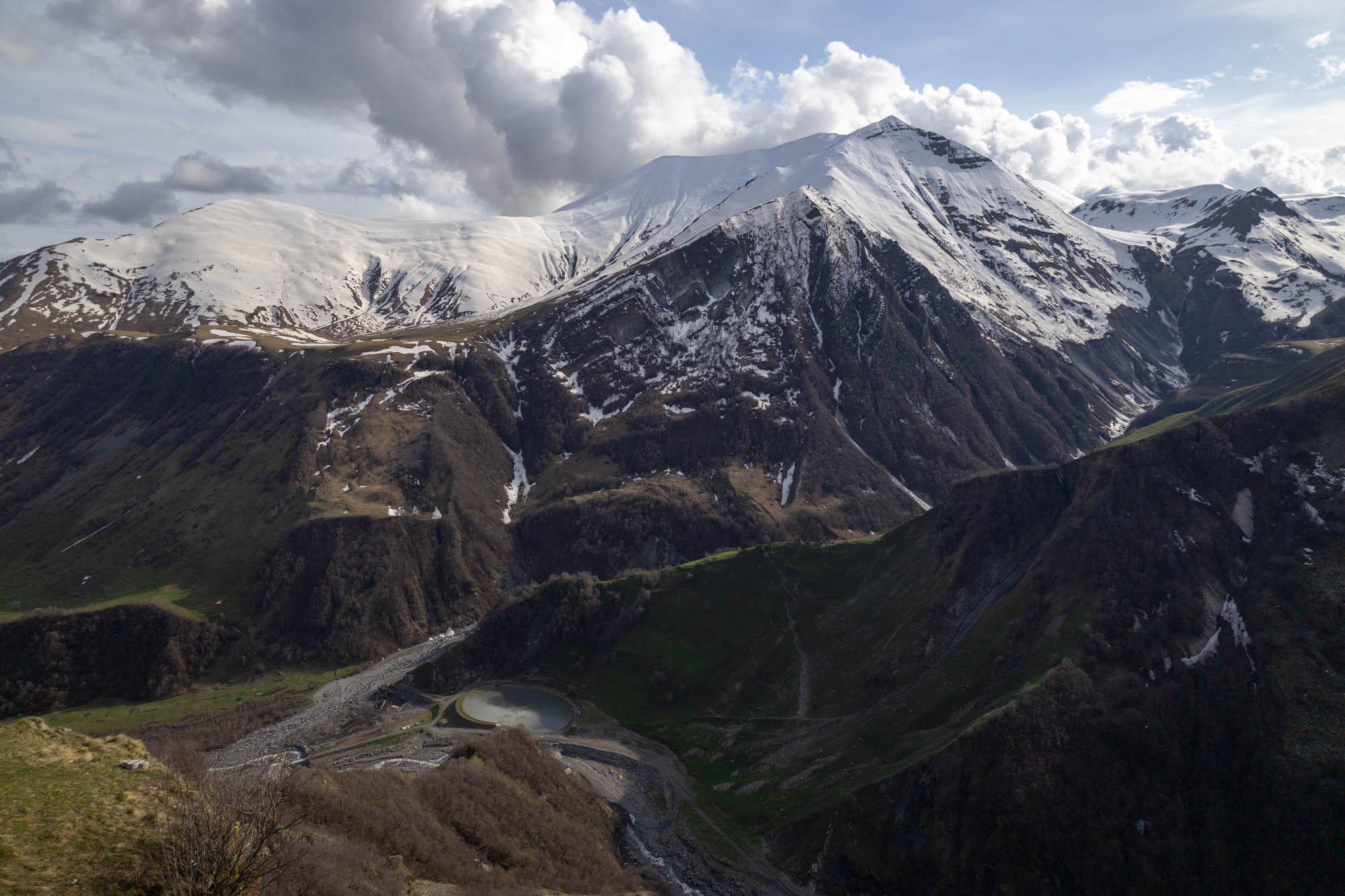
Decades have passed since the monument’s construction, but doubts surrounding the friendship persist. Following the 2008 Russian invasion and annexation of Georgian territory, the mural gained a more neutral name: Panorama Gudauri. Today, it’s a popular tourist attraction, often visited en route to or from the remote mountain town of Kazbegi. Twelve balconies built into the base of the mural offer views of the true panorama: the Devil’s Valley and the Caucasus Mountains.